

What is the effect of temperature on the ink flow in a Five Color Printing Machine?
Sep 12, 2025
Leave a message
In the realm of modern printing technology, the Five Color Printing Machine stands as a remarkable innovation, offering high - quality and vibrant prints for a wide range of applications. As a dedicated supplier of Five Color Printing Machines, I have witnessed firsthand the significance of various factors that can impact the performance of these machines. One such crucial factor is temperature, which can have a profound effect on the ink flow within the printing machine.
Understanding Ink Flow in a Five Color Printing Machine
Before delving into the effects of temperature on ink flow, it is essential to understand how ink flows in a Five Color Printing Machine. The ink flow system in a Five Color Printing Machine is a complex mechanism that involves several components. The ink is typically stored in ink reservoirs, from which it is transferred to the printing cylinders through a series of pumps and pipes. The printing cylinders then transfer the ink onto the printing substrate, such as paper or plastic.
The proper flow of ink is crucial for achieving consistent and high - quality prints. If the ink flow is too slow, it can result in incomplete or patchy prints. On the other hand, if the ink flow is too fast, it can lead to over - saturation and blurring of the printed image.
The Impact of Temperature on Ink Viscosity
One of the primary ways in which temperature affects ink flow is through its impact on ink viscosity. Viscosity is a measure of a fluid's resistance to flow. In general, as the temperature of a liquid increases, its viscosity decreases, and it becomes more fluid. Conversely, as the temperature decreases, the viscosity increases, and the liquid becomes thicker and more resistant to flow.
In the context of a Five Color Printing Machine, the ink's viscosity plays a critical role in determining its flow rate. At lower temperatures, the ink becomes more viscous, which can cause several problems. The increased viscosity can make it more difficult for the pumps to transfer the ink from the reservoirs to the printing cylinders. This can result in reduced ink flow, leading to inconsistent prints. Additionally, the thicker ink may not spread evenly on the printing cylinders, causing uneven coverage on the printing substrate.
For example, in a cold environment, say below 10°C, the ink in a Five Color Printing Machine may become so thick that it clogs the pipes and nozzles. This can lead to significant downtime as the machine needs to be shut down and cleaned to remove the blockages.
On the other hand, at higher temperatures, the ink's viscosity decreases. While this may seem beneficial as it allows for easier ink flow, it can also cause issues. If the temperature is too high, the ink may become too thin, and it can over - spread on the printing substrate. This can result in blurred or smudged prints, especially in areas with fine details.
Temperature and Ink Drying
Another aspect of the relationship between temperature and ink flow in a Five Color Printing Machine is related to ink drying. The drying process of ink is influenced by temperature. Higher temperatures generally accelerate the drying process, while lower temperatures slow it down.
When the ink dries too quickly due to high temperatures, it can cause problems with ink flow. As the ink dries on the printing cylinders or in the pipes, it can form a crust or blockage. This can disrupt the normal flow of ink and lead to printing defects. For instance, if the ink dries on the anilox roller (a key component in the ink transfer system), it can reduce the roller's ability to pick up and transfer the ink evenly.
Conversely, when the ink dries too slowly at low temperatures, it can cause issues with the subsequent printing stages. In a Five Color Printing Machine, multiple colors are printed in sequence. If the first color does not dry properly before the second color is applied, the two colors may mix, resulting in a distorted image.
Maintaining Optimal Temperature for Ink Flow
As a supplier of Five Color Printing Machines, I understand the importance of maintaining an optimal temperature for ink flow. Most inks used in these machines have a recommended temperature range within which they perform best. Typically, this range is between 20°C and 30°C.
To ensure that the temperature remains within this optimal range, several measures can be taken. Firstly, the printing environment should be climate - controlled. This can be achieved through the use of heating and cooling systems. For example, in a cold climate, a heater can be installed in the printing room to maintain a suitable temperature. In a hot climate, an air - conditioning system can be used to keep the temperature down.
Secondly, the ink reservoirs and pipes can be insulated. Insulation helps to minimize the impact of external temperature changes on the ink. It can keep the ink at a more stable temperature, reducing the fluctuations in viscosity and ensuring consistent ink flow.
Comparing with Other Printing Machines
It is also interesting to compare the impact of temperature on ink flow in a Five Color Printing Machine with other types of printing machines, such as the Three Color Printing Machine and the One Color Printing Machine.
In a One Color Printing Machine, the ink flow system is relatively simpler compared to a Five Color Printing Machine. Since there is only one color of ink to manage, the impact of temperature on ink flow may be less complex. However, the basic principles of viscosity and drying still apply. A change in temperature can still affect the ink's ability to flow properly and dry at the right rate.

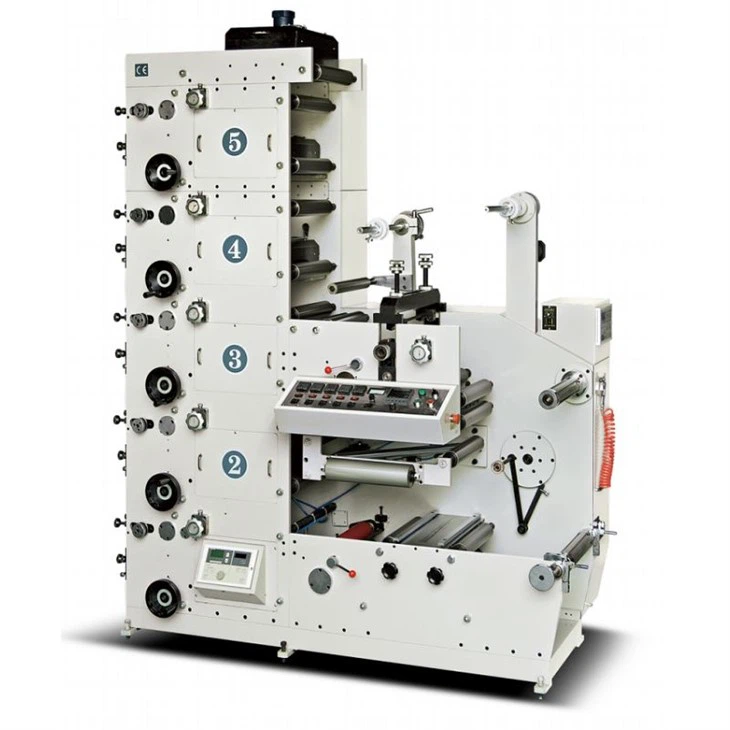
A Three Color Printing Machine has a more complex ink flow system than a One Color Printing Machine but is less complex than a Five Color Printing Machine. The interaction between the three colors of ink and the temperature can be more challenging to manage. For example, different inks may have different optimal temperature ranges, and finding a balance for all three colors can be tricky.
Conclusion and Call to Action
In conclusion, temperature has a significant effect on the ink flow in a Five Color Printing Machine. It impacts the ink's viscosity, drying process, and overall performance of the printing system. As a supplier, I am committed to providing our customers with the best - in - class Five Color Printing Machines and the knowledge to operate them effectively.
If you are in the market for a high - quality Five Color Printing Machine or have any questions regarding the impact of temperature on ink flow, I encourage you to reach out to us. We have a team of experts who can provide you with detailed information and guidance on choosing the right machine for your needs and ensuring optimal printing performance. Let's work together to achieve the best possible printing results.
References
- Smith, J. (2018). "The Science of Printing Inks". Printing Technology Press.
- Johnson, A. (2019). "Temperature Effects on Industrial Printing Processes". Journal of Industrial Printing, Vol. 12, pp. 45 - 56.
- Brown, C. (2020). "Optimizing Ink Flow in Multi - Color Printing Machines". Printing Innovation Journal, Vol. 15, pp. 78 - 89.