

How to ensure the quality of the slitting process in a Rotary Die - slitting Machine?
Nov 20, 2025
Leave a message
In the manufacturing industry, the slitting process is a crucial step that significantly impacts the quality of the final product. As a supplier of Rotary Die - slitting Machine, I understand the importance of ensuring high - quality slitting. In this blog, I will share some key factors and strategies to guarantee the quality of the slitting process in a Rotary Die - slitting Machine.
1. Machine Selection and Setup
The first step in ensuring the quality of the slitting process is to choose the right Rotary Die - slitting Machine. Different machines are designed for various materials, thicknesses, and production volumes. For instance, if you are dealing with thin and delicate materials, a machine with high precision and gentle handling capabilities is required. On the other hand, for thick and tough materials, a more robust machine with sufficient power is necessary.
Our company offers a wide range of Rotary Die - slitting Machines, including the Semi - rotary Die Cutting Machine and the Double Station Rotary Die - slitting Machine. The Semi - rotary Die Cutting Machine is suitable for small - to - medium - scale production, providing a good balance between cost and performance. The Double Station Rotary Die - slitting Machine, on the other hand, is designed for high - volume production, allowing for continuous operation and increased efficiency.
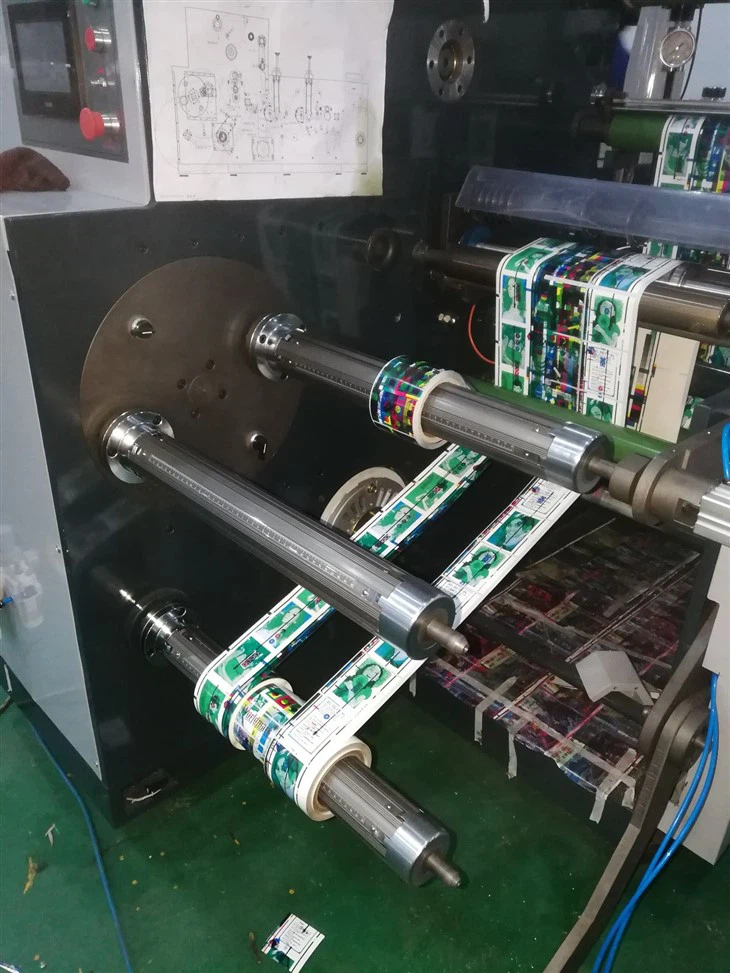
Once the appropriate machine is selected, proper setup is essential. This includes adjusting the cutting blades, setting the correct tension of the material, and aligning the die - cutting components. The cutting blades should be sharp and properly installed to ensure clean and precise cuts. Dull blades can lead to ragged edges, uneven cuts, and increased wear on the machine. The tension of the material should be carefully adjusted to prevent wrinkling, stretching, or bunching during the slitting process. Incorrect tension can result in inconsistent cut widths and poor overall quality.
2. Material Considerations
The quality of the slitting process is also highly dependent on the characteristics of the material being slit. Different materials have different properties, such as hardness, flexibility, and thickness, which can affect the cutting performance. For example, soft and flexible materials may require a different cutting speed and blade pressure compared to hard and rigid materials.
Before starting the slitting process, it is important to understand the material's properties and select the appropriate cutting parameters accordingly. This may involve conducting test cuts on a small sample of the material to determine the optimal settings. Additionally, the material should be properly stored and handled to prevent damage or contamination. Moisture, dust, and other contaminants can affect the cutting quality and reduce the lifespan of the cutting blades.
3. Cutting Blade Maintenance
The cutting blades are the most critical components of a Rotary Die - slitting Machine, and their maintenance is crucial for ensuring high - quality slitting. Regular blade inspection and sharpening are necessary to keep the blades in optimal condition. Blades should be inspected for signs of wear, such as dull edges, chipping, or cracking. If any damage is detected, the blades should be replaced immediately to prevent further deterioration of the cutting quality.
Sharpening the blades at regular intervals can also improve their cutting performance and extend their lifespan. However, it is important to use the correct sharpening method and equipment to avoid damaging the blades. Improper sharpening can result in uneven edges, reduced cutting precision, and increased blade wear. Our company provides professional blade sharpening services and can also offer guidance on proper blade maintenance.
4. Operator Training
Even with the best - quality machine and materials, the skill and knowledge of the operator play a significant role in ensuring the quality of the slitting process. Operators should receive comprehensive training on the operation and maintenance of the Rotary Die - slitting Machine. This includes understanding the machine's controls, safety procedures, and troubleshooting techniques.
Training should also cover the proper handling of materials, the adjustment of cutting parameters, and the recognition of common quality issues. By providing operators with the necessary skills and knowledge, they can make informed decisions during the slitting process and take appropriate actions to ensure high - quality results. Our company offers training programs for operators, which can be customized to meet the specific needs of our customers.
5. Quality Control Measures
Implementing effective quality control measures is essential for ensuring the consistency and reliability of the slitting process. This includes conducting regular inspections of the slit products to check for defects, such as uneven cut widths, ragged edges, or incorrect dimensions. Quality control checks can be performed at various stages of the production process, including during the slitting operation, after the slitting is completed, and before the products are packaged and shipped.
In addition to visual inspections, other quality control methods, such as using measuring tools and testing equipment, can also be employed. For example, calipers can be used to measure the cut widths, and micrometers can be used to check the thickness of the slit products. These measurements can provide objective data to evaluate the quality of the slitting process and identify any areas that need improvement.
6. Continuous Improvement
The slitting process is not a static operation, and there is always room for improvement. By collecting and analyzing data on the slitting process, such as production rates, quality metrics, and equipment performance, companies can identify areas for optimization and implement continuous improvement initiatives.
This may involve making adjustments to the machine settings, changing the cutting parameters, or upgrading the equipment. Continuous improvement can lead to increased productivity, reduced costs, and improved product quality. Our company is committed to helping our customers achieve continuous improvement in their slitting processes by providing technical support, product upgrades, and industry - best practices.
Conclusion
Ensuring the quality of the slitting process in a Rotary Die - slitting Machine requires a comprehensive approach that takes into account machine selection and setup, material considerations, cutting blade maintenance, operator training, quality control measures, and continuous improvement. As a supplier of Rotary Die - slitting Machines, we are dedicated to providing our customers with high - quality equipment, professional support, and innovative solutions to meet their slitting needs.

If you are interested in learning more about our Rotary Die - slitting Machines or need assistance in ensuring the quality of your slitting process, please feel free to contact us for a detailed discussion and potential procurement. We look forward to working with you to achieve your production goals.
References
- Smith, J. (2020). Handbook of Slitting Technology. Manufacturing Press.
- Johnson, A. (2019). Quality Control in the Slitting Process. Industrial Journal.
- Brown, C. (2018). Advances in Rotary Die - slitting Machine Design. Engineering Review.